
If you’re planning a wildlife trip to Jim Corbett National Park, Dhikala Zone is probably the name you’ll hear most often.
There’s a good reason for that.
Dhikala Zone is the most popular safari zone in Corbett and one of the few places in India where visitors regularly get close views of elephants, deer herds, crocodiles, birds of prey, and, if luck is on their side, the Bengal tiger.
The zone sits deep inside the core area of Corbett Tiger Reserve. The landscape changes constantly. One minute you’re driving through dense forest. A little later you’re looking across huge grasslands with deer feeding in the distance.
That’s what makes the experience memorable.
Where is Dhikala Zone located?
Dhikala Zone is located inside the core area of Jim Corbett National Park in Uttarakhand.
Most visitors enter through Dhangarhi Gate, which is the primary access point for reaching Dhikala Zone. The zone lies farther inside the reserve compared to several other safari areas, giving visitors a more immersive wildlife experience.
Because of its location, Dhikala feels wilder and less crowded than many tourism-focused destinations.
Once you’re inside, the forest takes over.
Why is Dhikala Zone so famous?
Ask wildlife photographers about their favorite Corbett zone and Dhikala Zone usually comes up near the top.
The biggest reason is habitat diversity.
The area includes:
- Dense sal forests
- River channels
- Open grasslands
- Wetlands
- Forest tracks
Different habitats attract different animals.
A morning safari can include deer grazing in the grasslands, elephants moving through forest patches, crocodiles resting near water bodies, and birds circling above the Ramganga River.
The famous Dhikala Chaur, a vast grassland area, is one of the biggest attractions inside the zone.
Wildlife is easier to spot here because the open landscape creates longer viewing distances.
Dhikala safari experience
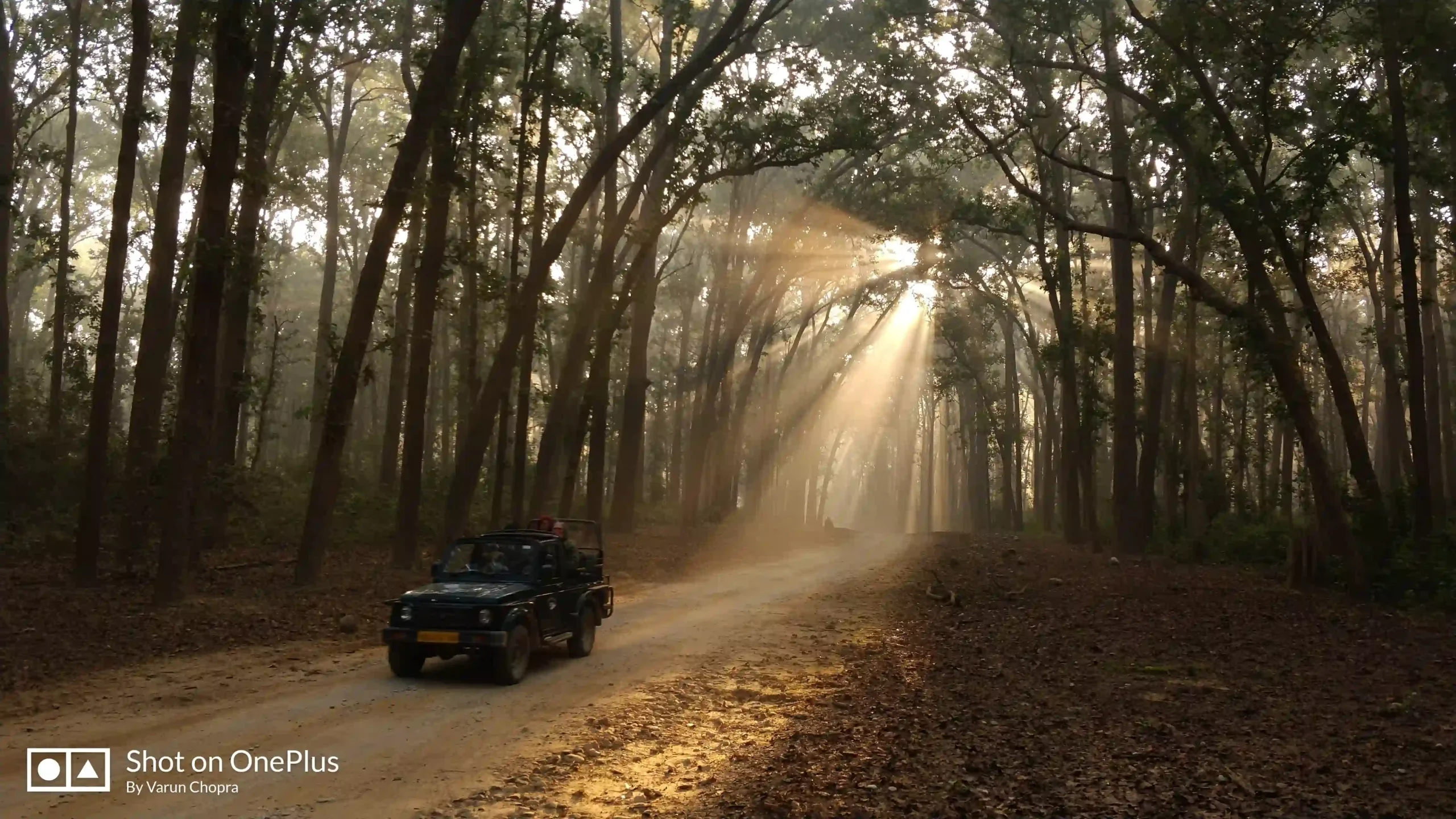
A Dhikala Zone safari feels different from a typical wildlife drive.
The journey starts early. Vehicles enter through designated gates and follow approved routes inside the reserve.
There’s anticipation from the moment you enter.
Every fresh pugmark on the track gets attention. Every alarm call from deer makes visitors look around. Sometimes nothing happens for 30 minutes. Then suddenly an elephant herd appears from the trees.
That’s wildlife.
No script. No guarantees.
Just a forest doing what forests do.
The variety of landscapes keeps the safari interesting even when animal activity slows down.
Many visitors leave with hundreds of photographs and a camera roll full of birds they didn’t expect to see.
Dhikala canter safari
The dhikala Zone canter safari is one of the most popular safari options available in Corbett.
A canter is a larger open vehicle designed for multiple passengers. It allows visitors to explore the core zone without staying overnight inside the forest.
This option is popular among first-time visitors because it provides access to areas that many travelers specifically come to see.
The elevated seating position can also improve visibility during wildlife sightings.
During peak season, canter seats can fill quickly. Advance planning helps.
Dhikala safari timings
Safari timings may change slightly depending on weather conditions and park regulations.
Generally, safaris operate in two sessions.
Morning safari
Morning drives usually begin shortly after sunrise.
This is often the most productive time for wildlife viewing because temperatures remain cooler and animals stay active.
Photographers also prefer morning light because it creates cleaner images.
Afternoon safari
Afternoon safaris begin later in the day and continue toward evening.
Many animals become active again as temperatures drop.
The softer evening light can create excellent photography conditions, especially around grassland areas.
Visitors should always arrive before reporting time to avoid delays at the gate.
Best time to visit Dhikala Zone
The best time to visit depends on what you want to see.
Winter season
Winter generally runs from November to February.
The weather stays pleasant and bird activity increases significantly.
Migratory species arrive during this period, making the zone attractive for birdwatchers.
Morning safaris can feel cold, so carrying warm clothing helps.
Summer season
March to June attracts many wildlife enthusiasts.
Temperatures rise, but visibility often improves because vegetation becomes thinner.
Animals spend more time near water sources, increasing sighting opportunities.
Many experienced wildlife photographers prefer late summer for this reason.
Wildlife sightings in Dhikala Zone
Wildlife sightings are the main reason people choose Dhikala.
Tiger sightings get the most attention, but the zone supports much more than tigers.
Bengal tiger
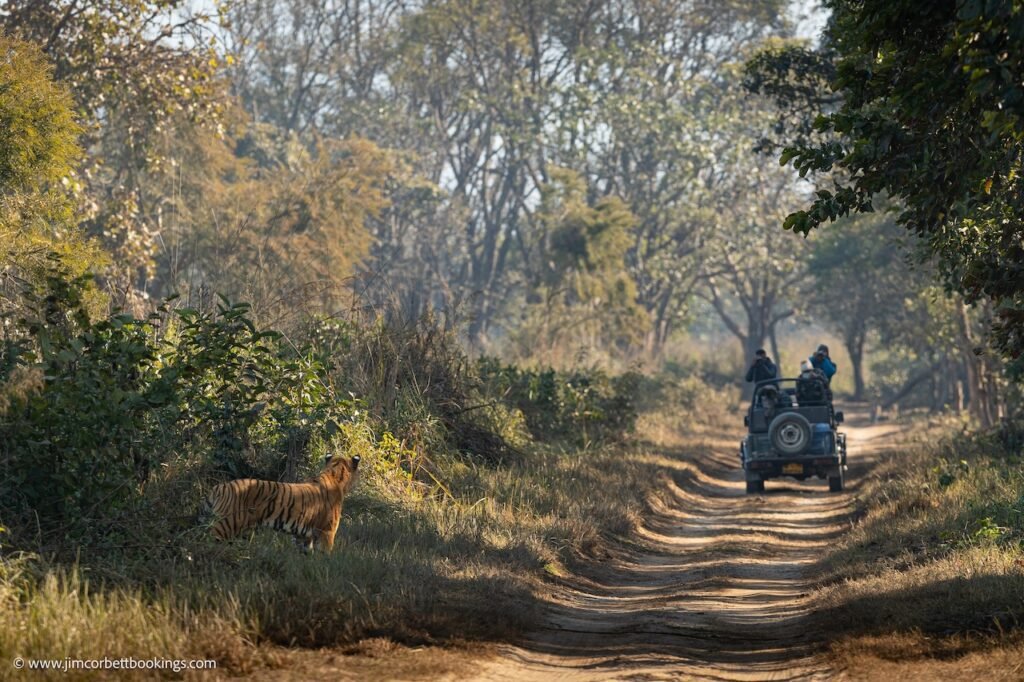
Dhikala has one of the strongest reputations for tiger sightings in Corbett.
There’s never a guarantee.
Even so, the combination of habitat, prey availability, and forest coverage creates good conditions for tiger movement.
Fresh pugmarks are common during many safaris.
Asian elephants
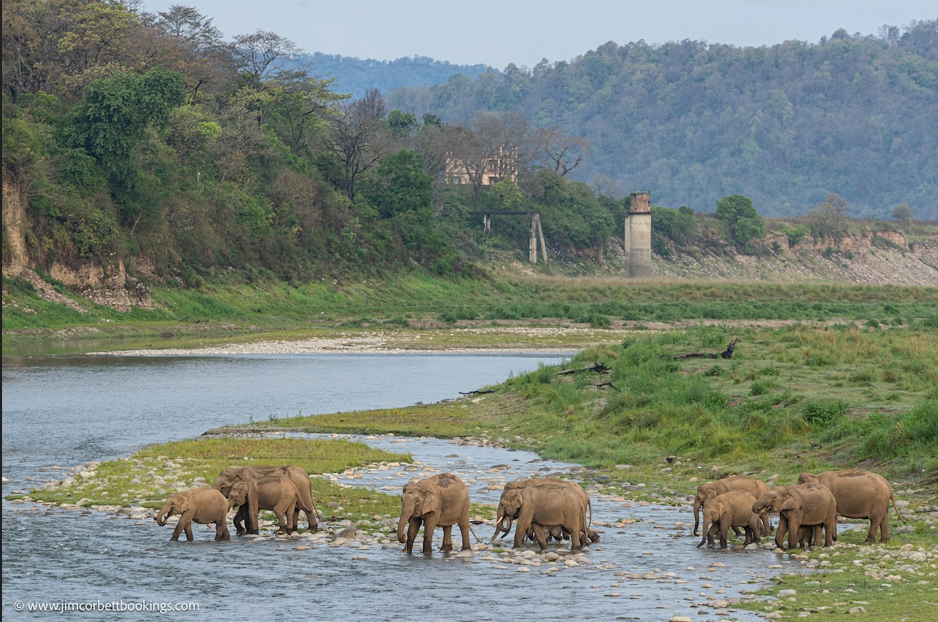
Large elephant herds frequently move through Dhikala.
Watching a family group cross a grassland is one of the most impressive wildlife moments visitors experience here.
Deer species
Spotted deer and sambar deer appear throughout the zone.
Their alarm calls often alert guides to predator activity nearby.
Crocodiles
The Ramganga River supports healthy crocodile populations.
You’ll often find them resting along riverbanks during sunny hours.
Birds
Birdwatchers have plenty to enjoy.
Eagles, kingfishers, hornbills, owls, peafowl, parakeets, and numerous water birds are regularly seen.
Even visitors who aren’t interested in birding usually end up taking photos of them.
Dhikala zone booking guide
Dhikala zone booking should be completed as early as possible.
This is the most sought-after safari area in Jim Corbett. Demand stays high during weekends, holidays, and peak travel months.
Many travelers secure their Corbett Safari Booking weeks before their planned visit.
Waiting until the last minute can limit available dates and safari options.
Before booking, keep these details ready:
- Full name
- Valid government ID
- Contact details
- Travel dates
- Safari preference
Accurate information helps avoid booking issues later.
How to plan your safari
A little planning makes a big difference.
Start by checking safari availability through the Corbett Safari Booking page before finalizing transportation and accommodation.
Once your safari date is confirmed, you can plan the rest of the trip around it.
Many visitors do the opposite and end up struggling to find suitable safari slots.
Dhikala demand stays strong throughout much of the tourism season.
Things to carry during a Dhikala safari
Packing light works best.
I recommend carrying:
- Photo ID
- Binoculars
- Camera
- Extra batteries
- Water bottle
- Sunglasses
- Hat or cap
- Neutral-colored clothing
- Light jacket during winter
Bright colors can draw attention and reduce the natural feel of wildlife observation.
Comfortable clothing helps during longer safari sessions.
Safari rules visitors should follow
The forest works best when visitors respect it.
A few simple habits improve the experience for everyone.
- Stay seated during the safari
- Follow guide instructions
- Keep noise levels low
- Don’t litter
- Avoid feeding wildlife
- Keep mobile phones silent
Wild animals behave more naturally when human disturbance stays low.
That’s exactly what you want during a safari.
Photography tips for Dhikala
Wildlife photography rewards preparation.
Keep your camera ready even when nothing seems to be happening.
Many sightings appear unexpectedly.
A zoom lens helps because animals rarely approach vehicles closely.
Fast shutter speeds are useful for moving subjects, especially elephants and deer.
Morning light often produces the sharpest photographs.
Common mistakes visitors make
The biggest mistake is expecting instant tiger sightings.
Wildlife doesn’t work on a schedule.
Other common mistakes include:
- Booking late
- Arriving late at the gate
- Wearing bright clothes
- Talking loudly
- Carrying insufficient camera storage
Patience usually leads to a better safari experience.
The forest reveals itself gradually.
Why Dhikala Zone remains the top choice in Corbett
Several safari zones exist inside Jim Corbett.
Dhikala continues to attract the most attention because it combines strong wildlife activity, beautiful landscapes, open grasslands, and a true wilderness atmosphere.
Every safari feels slightly different.
That’s part of the appeal.
One visitor may remember a tiger crossing the track. Another may talk about a herd of elephants blocking the road for 20 minutes.
Both leave with a story worth telling.
Book your Dhikala safari
Planning ahead gives you the best chance of securing your preferred safari date.
If you’re preparing for a visit, check availability through the Corbett Safari Booking page and reserve your slot early.
Book your Dhikala safari before peak-season permits become difficult to find.
FAQ
Is Dhikala Zone the best safari zone in Jim Corbett?
Many wildlife enthusiasts consider Dhikala the best zone because of its diverse habitat and strong wildlife activity.
What is the Dhikala Zone canter safari?
It is a shared safari conducted in a larger open vehicle that allows visitors to explore the Dhikala tourism zone.
Which gate is used for Dhikala Zone?
Most visitors access the zone through Dhangarhi Gate.
What animals can I see in Dhikala?
Visitors commonly spot elephants, deer, crocodiles, birds, wild boar, jackals, and occasionally tigers.
What is the best month to visit Dhikala?
November to June is generally the most popular period for visiting the zone.
How early should I complete my Dhikala zone booking?
Booking several weeks in advance is recommended, especially during peak travel months.
Can I visit Dhikala without staying inside the forest?
Yes. Many visitors choose the dhikala canter safari, which allows access without overnight accommodation.